
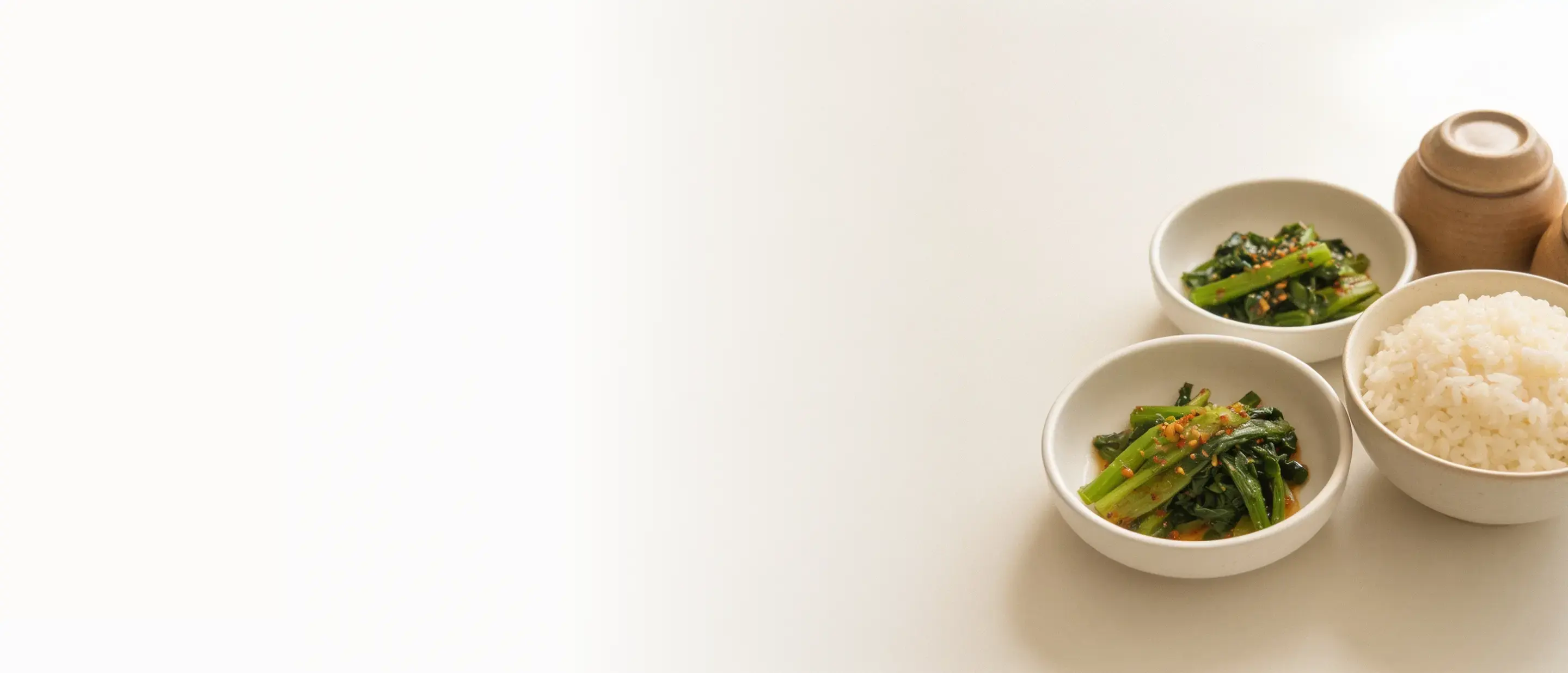
Food and dining in Korea: how do you eat comfortably as a visitor and around treatment?
Korean meals are built around rice, soup and shared side dishes, and visitors can order with picture menus, kiosks, translation apps or a written card. If you have allergies or religious or dietary requirements, ask before you order, because sauces, broths and kimchi often contain ingredients you cannot see. Around medical treatment, your doctor's instructions on fasting, food and alcohol come before any general advice on this page.
Last reviewed: 4 October 2026
How do you order and eat at a restaurant in Korea?
Many restaurants seat you, take the order at the table, a kiosk or a tablet, and bring shared side dishes with the meal. You usually pay at the counter when you leave, and tipping is not customary. A translation app and a few written phrases cover most situations.
- Side dishes, called banchan, come with the meal and are shared by the table.
- Some dishes, such as grilled meat and stews, are sold for two or more people. Ask whether a single portion is possible if you are eating alone.
- Spoons, chopsticks and napkins are often in a drawer at the side of the table or in a box on it.
- Water is often self-service. Look for a dispenser and cups.
- Staff do not always check on tables. Press the call button on the table or raise your hand.
- Kiosks and tablets may have limited language options. Ask staff for help or point at the picture menu.
- Ask how spicy a dish is and whether a milder version can be made.
How do you manage food allergies and dietary needs in Korea?
Tell the restaurant before you order, in Korean and in writing, exactly what you cannot eat. Many Korean dishes contain seafood, soy, wheat, sesame or egg in sauces, broths and seasonings, where you cannot see them. If the staff cannot confirm what is in a dish, choose something else.
Prepare a card in Korean that names each ingredient you avoid and says whether it is an allergy. Show it every time, and ask about cross-contact if a trace amount is a risk for you, since shared grills, fryers and utensils are common.
Packaged food carries an ingredient label, usually in Korean. Use the camera function of a translation app, and do not eat something you cannot check. If you carry emergency allergy medicine, keep it with you and learn how to call for help before you need to.
| Ingredient | Where it often appears | What to ask |
|---|---|---|
| Fish and shellfish | Kimchi made with salted seafood or fish sauce, anchovy and seafood broths, many side dishes | Is there fish sauce, salted shrimp or seafood broth in this dish? |
| Soy and wheat | Soy sauce, soybean paste, red pepper paste, noodles, dumplings and batter | Is this made with soy sauce, soybean paste or flour? |
| Sesame, peanuts and tree nuts | Sesame oil and seeds in seasoned vegetables, rice dishes and sauces. Nuts in some sauces, side dishes and desserts. | Is sesame oil, sesame seed or any nut used? |
| Egg and dairy | Egg as a topping or in batter. Dairy in bakery items, cafe drinks and dishes with cheese. | Is there egg, milk, butter or cheese in this? |
| Meat and meat broth | Soups, stews and noodle broths made from beef, pork or chicken bones, even when no meat is visible | What is the broth made from? |
| Alcohol | Some marinades and sauces made with cooking wine | Is alcohol or cooking wine used in this dish? |
Can you eat vegetarian, vegan or halal in Korea?
You can, with preparation. Restaurants that describe themselves as vegetarian, vegan or halal exist and are easier to find in larger cities, but ordinary restaurants rarely separate ingredients or cooking tools. Ask what a dish contains and how it is prepared, and decide for yourself whether it fits your practice.
- Vegetarian and vegan: a dish without visible meat may still use meat or anchovy broth, fish sauce or salted seafood. Ask about the broth, the kimchi and the seasoning.
- Temple-style cuisine is traditionally prepared without meat. Ask about individual dishes, because restaurants differ.
- Halal: restaurants use different descriptions, such as halal-certified, self-declared halal, Muslim-friendly or pork-free. These do not mean the same thing, so ask what the description covers.
- Ask whether alcohol is served on the premises or used in cooking, and whether pork is cooked in the same kitchen, if these matter to you.
- Certification and menus change. Confirm with the restaurant close to your visit instead of relying on an old list or review.
- Accommodation with a kitchen and food from supermarkets give you more control over what you eat.
- Hospital meals: if you will stay overnight, tell the hospital your dietary requirements before admission and ask what it can provide.
What can you eat while you recover from a procedure?
Follow the dietary instructions from your hospital first. If they allow ordinary food, Korea has mild, soft dishes that are easy to find, such as rice porridge, steamed egg and plain soups. None of these is a treatment: they are simply gentle options when you do not feel like a heavy or spicy meal.
- After dental, jaw or facial procedures, ask how soft your food should be and for how long.
- Ask your doctor about spicy, salty, very hot, hard or chewy food if the instructions do not mention it.
- Take medicine with or without food as the doctor or pharmacist instructed.
- If going out is tiring, ask your accommodation or coordinator to help you order delivery or buy food nearby.
| Dish | What it is | What to check |
|---|---|---|
| Juk | Soft rice porridge, plain or with vegetables, chicken, beef or seafood | The added ingredients, if you have allergies. Packaged versions are sold in convenience stores. |
| Gyeran-jjim | Steamed egg, soft and usually mild | It is served very hot, and the stock may contain seafood. |
| Sundubu | Very soft tofu, often served in a spicy stew | Ask for a version that is not spicy. The stew often contains seafood or meat. |
| Seolleongtang | A pale soup of long-simmered beef bones with rice or noodles | You add the salt at the table, so you control the seasoning. |
How do you plan meals around medical treatment?
Try the food you came for before treatment, keep meals plain the day before, and follow the hospital's fasting and diet instructions exactly. After a procedure, ask your doctor before alcohol, saunas, hot baths, massage or strenuous activity. Ask for the instructions in writing, in a language you can read.
Hospitals often give fasting instructions before health checkups, sedation and surgery. If an instruction is unclear, ask the hospital instead of guessing.
| When | Food and drink | What to confirm with the hospital |
|---|---|---|
| Days before treatment | Restaurants, street food and the dishes you want to try | Whether to stop alcohol, supplements or any food before the procedure, and from when |
| Day before and morning of treatment | Familiar, simple meals. Save raw, very spicy or unfamiliar food for another part of the trip. | Whether you need to fast, from what time, and whether water and your regular medicine are allowed |
| First days after treatment | What the written instructions allow | What to avoid and for how long, and when you can return to normal meals |
| After the final check | A normal diet, if your doctor agrees | When alcohol is allowed and whether any restriction continues at home |
Before you book
This page is general travel information. It is not medical or nutritional advice and it does not recommend any restaurant, dish or product. Menus, ingredients, opening hours and prices change, so confirm them with the restaurant or provider, especially if you have an allergy or a religious requirement.
If you have had or are about to have a medical procedure, your doctor's instructions on food, drink and alcohol come first.
Sources
Checked on 4 October 2026. Rules change, so confirm with the official source before you travel.

Plan your trip with the TripDoc app
Search hospitals, ask questions in your own language through AI translation and organize your stay in one place.